Book Club

Northbound Wealth's Top Financial Book List 

The Northbound Wealth Financial Book List focuses on topics that are relevant to personal finance, markets, trading, investing, economics, innovation, faith, and generosity (not an endorsement of any author or publisher, for educational purposes only)

Managing God's Money: A Biblical Guide

God cares a great deal more about our money than most of us imagine. The sheer enormity of Scripture’s teaching on this subject screams for our attention. In fact, Jesus says more about how we are to view and handle money and possessions than about any other topic―including both heaven and hell. In Managing God's Money, Randy Alcorn breaks down exactly what the Bible has to say about how we are to handle our money and posessions in a simple, easy-to-follow format. Filled with Scripture references, Managing God's Money is the perfect reference tool for anyone who is interested in gaining a solid biblical understanding of money, possessions, and eternity.

The Millionaire Next door: The Suprising Secrets of Americia's Wealthy

The bestselling The Millionaire Next Door identifies seven common traits that show up again and again among those who have accumulated wealth. Most of the truly wealthy in this country don't live in Beverly Hills or on Park Avenue-they live next door. This new edition, the first since 1998, includes a new foreword for the twenty-first century by Dr. Thomas J. Stanley.

the Intelligent Investor: The Definitive Book on Value Investing

This classic text is annotated to update Graham's timeless wisdom for today's market conditions... 

The greatest investment advisor of the twentieth century, Benjamin Graham, taught and inspired people worldwide. Graham's philosophy of "value investing" -- which shields investors from substantial error and teaches them to develop long-term strategies -- has made The Intelligent Investor the stock market bible ever since its original publication in 1949.

Over the years, market developments have proven the wisdom of Graham's strategies. While preserving the integrity of Graham's original text, this revised edition includes updated commentary by noted financial journalist Jason Zweig, whose perspective incorporates the realities of today's market, draws parallels between Graham's examples and today's financial headlines, and gives readers a more thorough understanding of how to apply Graham's principles.

Vital and indispensable, this HarperBusiness Essentials edition of The Intelligent Investor is the most important book you will ever read on how to reach your financial goals.

A Random Walk Down Wall Street: The time-Tested Strategy for Successful Investing

In a time of rampant misinformation about ways of growing your money, Burton G. Malkiel’s gimmick-free investment guide is more necessary than ever. Whether you’re considering your first 401k contribution or contemplating retirement, the fully updated, fiftieth anniversary edition of A Random Walk Down Wall Street remains the best investment guide money can buy.

Drawing on his experience as an economist, financial adviser, and successful investor, Malkiel shows why an individual who saves consistently over time and buys a diversified set of index funds can achieve above-average investment results. He addresses current investment fads and critically analyzes cryptocurrencies, NFTs, and meme stocks. Malkiel reveals how to be a tax smart investor and how to make sense of recently popular investment management techniques, including factor investing, risk parity, and ESG portfolios.

Investors of every age, experience level, and risk tolerance will find the step-by-step guidance they need to protect and grow their dollars.

The Psychology of Money: Timeless lessons on wealth, greed, and happiness

Doing well with money isn’t necessarily about what you know. It’s about how you behave. And behavior is hard to teach, even to really smart people.

Money―investing, personal finance, and business decisions―is typically taught as a math-based field, where data and formulas tell us exactly what to do. But in the real world people don’t make financial decisions on a spreadsheet. They make them at the dinner table, or in a meeting room, where personal history, your own unique view of the world, ego, pride, marketing, and odd incentives are scrambled together.

In The Psychology of Money, award-winning author Morgan Housel shares 19 short stories exploring the strange ways people think about money and teaches you how to make better sense of one of life’s most important topics.

Money, possessions & eternity

Randy Alcorn is an author and the founder and director of Eternal Perspective Ministries, a nonprofit ministry dedicated to teaching principles of God’s Word and assisting the church in ministering to unreached, unfed, unborn, uneducated, unreconciled, and unsupported people around the world. A New York Times bestselling author of over 50 books, including Heaven, The Treasure Principle, If God Is Good, Happiness, and the award-winning novel Safely Home, his books sold exceed eleven million copies and have been translated into over seventy languages. Randy resides in Oregon. 

This practical and refreshing theology of money contains topical and Scripture indexes, a study guide, and five helpful appendixes.

Randy Alcorn presents a biblical and comprehensive view of money and possessions, including the following:

- Why is money so important to God?
- How can we be liberated from materialism?
- What should we do about debt?
- How much does God want us to give?
- What about gambling? Investing? Insurance? Saving? Retirement? Inheritance?

Who wants to settle for fleeting treasures on earth . . . when God offers everlasting treasures in heaven? It’s time to rethink our perspectives on money and possessions. In this thoroughly researched classic, Randy Alcorn shows us how to view these things accurately―as God’s provision for our good, the good of others, and his glory.

The Algebra of Wealth: A Simple Formula for Financial Security

AN INSTANT #1 NEW YORK TIMES BESTSELLER

A must-have guide to optimizing your life for wealth and success, from bestselling author, NYU professor, and cohost of the Pivot podcast Scott Galloway.

Today’s workers have more opportunities and mobility than any generation before. They also face unprecedented challenges, including inflation, labor and housing shortages, and climate volatility. Even the notion of retirement is undergoing a profound rethink, as our lifespans extend and our relationship with work evolves. In this environment, the tried-and-true financial advice our parents followed is no longer enough. It’s time for a new playbook.

In The Algebra of Wealth, Scott Galloway lays bare the rules of financial success in today’s economy. In his characteristic unvarnished, no-BS style, he explains what you need to know in order to better your chances for economic security no matter what. You’ll learn:

How to find and follow your talent, not your passion, when making career decisions
How to ride and optimize big economic waves (hard truth: market dynamics always trump individual achievement)
What small steps you can take that pay big returns later, including diversification and tax planning
How stoicism can help you minimize spending and develop better financial habits
Brimming with wise, game-changing advice from one of the world’s most popular business school professors, The Algebra of Wealth offers a powerful framework for making the most of what opportunities come your way.

Just Keep Buying: Proven Ways to Save Money and Build Your Wealth 

Everyone faces big questions when it comes to money - questions about saving, investing, and whether you’re getting it right with your finances.

Unfortunately, many of the answers provided by the financial industry have been based on belief and conjecture, rather than data and evidence - until now.

In Just Keep Buying, the hugely popular finance blogger Nick Maggiulli crunches the numbers to answer the biggest questions in personal finance and investing, while providing you with proven ways to build your wealth right away.

You will learn why you need to save less than you think; why saving up cash to buy market dips isn’t a good idea; how to survive (and thrive) during a market crash; and much more.

By following the strategies revealed here, you can act smarter, and live richer, each and every day. It’s time to take the next step in your wealth-building journey. It’s time to just keep buying.

God Owns It All - Bible Study Book: Finding Contentment and Confidence in Your Finances

God Owns It All Bible Study Book includes small-group experiences for six sessions, weekly individual-study opportunities, applicable Scripture, “How to Use This Study,” and tips for leading a group.
 
We live in the wealthiest nation in the history of the world. We are so wealthy that people living at the federal poverty line are still wealthier than 85 percent of the world. So why don’t we feel rich? Why do we experience so much unhappiness and discontentment? The world would have us believe our lives would be better if we had just a little more. If this is true, then why don’t people who have a little more seem content?
 
God Owns It All tackles the money question we all ask: How much is enough? The answer to this question is found in God’s Word. With over four decades of experience in the financial-services industry, Ron Blue presents financial principles that are affirmed by the authority of Scripture and tested by the marketplace. He knows that God’s principles work and are needed in our finances. These biblically based principles will equip us to approach money management and financial planning with freedom, generosity, contentment, and confidence. When we apply the biblical truths offered in this study, our finances will be ordered, our decisions will be simplified, and our experience will invite contentment in all areas of our lives. 
 
Features: 
• Financial principles from biblical truths
• Leader tips
• Individual-study opportunities for ongoing spiritual growth
• Group and personal study components
• Step-by-step plans for six group sessions
 
Benefits: 
• Gain a sense of fulfillment and contentment in your finances.
• Discover financial principles that are affirmed by Scripture.
• Equip participants to approach money management and financial planning with freedom, generosity, contentment, and confidence.
• Help group members understand financial management as a part of discipleship.

Smart Money Smart Kids: Raising the Next Generation to Win with Money

In Smart Money Smart Kids, financial expert and best-selling author Dave Ramsey and his daughter Rachel Cruze equip parents to teach their children how to win with money. Starting with the basics like working, spending, saving, and giving, and moving into more challenging issues like avoiding debt for life, paying cash for college, and battling discontentment, Dave and Rachel present a no-nonsense, common-sense approach for changing your family tree.

Financial Peace Revisited: New Chapters on Marriage, Singles, Kids and Families

With the help of a #1 New York Times bestselling author and finance expert, set your finances right with these updated tactics and practices

Dave Ramsey knows what it's like to have it all. By age twenty-six, he had established a four-million-dollar real estate portfolio, only to lose it by age thirty. He has since rebuilt his financial life and, through his workshops and his New York Times business bestsellers Financial Peace and More than Enough, he has helped hundreds of thousands of people to understand the forces behind their financial distress and how to set things right-financially, emotionally, and spiritually. 

In this new edition of Financial Peace, Ramsey has updated his tactics and philosophy to show even more readers:

   • how to get out of debt and stay out
   • the KISS rule of investing—"Keep It Simple, Stupid"
   • how to use the principle of contentment to guide financial decision making
   • how the flow of money can revolutionize relationships

With practical and easy to follow methods and personal anecdotes, Financial Peace is the road map to personal control, financial security, a new, vital family dynamic, and lifetime peace.

Thinking, Fast and Slow

*Major New York Times Bestseller
*More than 2.6 million copies sold
*One of The New York Times Book Review's ten best books of the year
*Selected by The Wall Street Journal as one of the best nonfiction books of the year
*Presidential Medal of Freedom Recipient
*Daniel Kahneman's work with Amos Tversky is the subject of Michael Lewis's best-selling The Undoing Project: A Friendship That Changed Our Minds

In his mega bestseller, Thinking, Fast and Slow, Daniel Kahneman, world-famous psychologist and winner of the Nobel Prize in Economics, takes us on a groundbreaking tour of the mind and explains the two systems that drive the way we think.

System 1 is fast, intuitive, and emotional; System 2 is slower, more deliberative, and more logical. The impact of overconfidence on corporate strategies, the difficulties of predicting what will make us happy in the future, the profound effect of cognitive biases on everything from playing the stock market to planning our next vacation―each of these can be understood only by knowing how the two systems shape our judgments and decisions.

Engaging the reader in a lively conversation about how we think, Kahneman reveals where we can and cannot trust our intuitions and how we can tap into the benefits of slow thinking. He offers practical and enlightening insights into how choices are made in both our business and our personal lives―and how we can use different techniques to guard against the mental glitches that often get us into trouble. Topping bestseller lists for almost ten years, Thinking, Fast and Slow is a contemporary classic, an essential book that has changed the lives of millions of readers.

The Little Book of Common Sense Investing: The Only Way to Guarantee Your Fair Share of Stock Market Returns (Little Books, Big Profits)

The best-selling investing "bible" offers new information, new insights, and new perspectives

The Little Book of Common Sense Investing is the classic guide to getting smart about the market. Legendary mutual fund pioneer John C. Bogle reveals his key to getting more out of investing: low-cost index funds. Bogle describes the simplest and most effective investment strategy for building wealth over the long term: buy and hold, at very low cost, a mutual fund that tracks a broad stock market Index such as the S&P 500.

While the stock market has tumbled and then soared since the first edition of Little Book of Common Sense was published in April 2007, Bogle’s investment principles have endured and served investors well. This tenth anniversary edition includes updated data and new information but maintains the same long-term perspective as in its predecessor. 

Bogle has also added two new chapters designed to provide further guidance to investors: one on asset allocation, the other on retirement investing.

A portfolio focused on index funds is the only investment that effectively guarantees your fair share of stock market returns. This strategy is favored by Warren Buffett, who said this about Bogle: “If a statue is ever erected to honor the person who has done the most for American investors, the hands-down choice should be Jack Bogle. For decades, Jack has urged investors to invest in ultra-low-cost index funds. Today, however, he has the satisfaction of knowing that he helped millions of investors realize far better returns on their savings than they otherwise would have earned. He is a hero to them and to me.”

Bogle shows you how to make index investing work for you and help you achieve your financial goals, and finds support from some of the world's best financial minds: not only Warren Buffett, but Benjamin Graham, Paul Samuelson, Burton Malkiel, Yale’s David Swensen, Cliff Asness of AQR, and many others.

This new edition of The Little Book of Common Sense Investing offers you the same solid strategy as its predecessor for building your financial future.

Build a broadly diversified, low-cost portfolio without the risks of individual stocks, manager selection, or sector rotation.
Forget the fads and marketing hype, and focus on what works in the real world.
Understand that stock returns are generated by three sources (dividend yield, earnings growth, and change in market valuation) in order to establish rational expectations for stock returns over the coming decade.
Recognize that in the long run, business reality trumps market expectations.
Learn how to harness the magic of compounding returns while avoiding the tyranny of compounding costs.
While index investing allows you to sit back and let the market do the work for you, too many investors trade frantically, turning a winner’s game into a loser’s game. The Little Book of Common Sense Investing is a solid guidebook to your financial future.

The Essays of Warren Buffett: Lessons for Corporate America

A modern classic, The Essays of Warren Buffett: Lessons for Corporate America is the book Buffett autographs most and likes best. Its popularity and longevity over three decades attest to the widespread appetite for this definitive statement of Mr. Buffett’s thoughts that’s uniquely comprehensive, non-repetitive, and digestible. New and experienced readers alike will gain an invaluable informal education by perusing this classic arrangement of Mr. Buffett's best writings.

Technical Analysis of the Financial Markets

John J. Murphy has updated his landmark bestseller Technical Analysis of the Futures Markets, to include all of the financial markets.This outstanding reference has already taught thousands of traders the concepts of technical analysis and their application in the futures and stock markets. Covering the latest developments in computer technology, technical tools, and indicators, the second edition features new material on candlestick charting, intermarket relationships, stocks and stock rotation, plus state-of-the-art examples and figures. From how to read charts to understanding indicators and the crucial role technical analysis plays in investing, readers gain a thorough and accessible overview of the field of technical analysis, with a special emphasis on futures markets. Revised and expanded for the demands of today's financial world, this book is essential reading for anyone interested in tracking and analyzing market behavior.

Irrational Exuberance 

As Robert Shiller’s new 2009 preface to his prescient classic on behavioral economics and market volatility asserts, the irrational exuberance of the stock and housing markets “has been ended by an economic crisis of a magnitude not seen since the Great Depression of the 1930s.” As we all, ordinary Americans and professional investors alike, crawl from the wreckage of our heedless bubble economy, the shrewd insights and sober warnings, and hard facts that Shiller marshals in this book are more invaluable than ever.

The original and bestselling 2000 edition of Irrational Exuberance evoked Alan Greenspan’s infamous 1996 use of that phrase to explain the alternately soaring and declining stock market. It predicted the collapse of the tech stock bubble through an analysis of the structural, cultural, and psychological factors behind levels of price growth not reflected in any other sector of the economy. In the second edition (2005), Shiller folded real estate into his analysis of market volatility, marshalling evidence that housing prices were dangerously inflated as well, a bubble that could soon burst, leading to a “string of bankruptcies” and a “worldwide recession.” That indeed came to pass, with consequences that the 2009 preface to this edition deals with.

Discover List 2022-2025

The Northbound Wealth Reading Guide focuses on non-fiction titles that are relevant to business, economics, innovation, science, faith, philanthropy, and art. 

Health & Wellness - Medicine

Health & Wellness - Medicine

Blind Spots: When Medicine Gets It Wrong, and What It Means for Our Health

From Johns Hopkins medical expert Dr. Marty Makary, the New York Times-bestselling author of The Price We Pay-an eye-opening look at the medical groupthink that has led to public harm, and what you need to know about your health.

More Americans have peanut allergies today than at any point in history. Why? In 2000, the American Academy of Pediatrics issued a strict recommendation that parents avoid giving their children peanut products until they're three years old. Getting the science perfectly backward, triggering intolerance with lack of early exposure, the US now leads the world in peanut allergies-and this misinformation is still rearing its head today.

How could the experts have gotten it so wrong? Dr. Marty Makary asks, Could it be that many modern-day health crises have been caused by the hubris of the medical establishment? Experts said for decades that opioids were not addictive, igniting the opioid crisis. They refused menopausal women hormone replacement therapy, causing unnecessary suffering. They demonized natural fat in foods, driving Americans to processed carbohydrates as obesity rates soared. They told citizens that there are no downsides to antibiotics and prescribed them liberally, causing a drug-resistant bacteria crisis.

When modern medicine issues recommendations based on good scientific studies, it shines. Conversely, when modern medicine is interpreted through the harsh lens of opinion and edict, it can mold beliefs that harm patients and stunt research for decades. In Blind Spots, Dr. Makary explores the latest research on critical topics ranging from the microbiome to childbirth to nutrition and longevity and more, revealing the biggest blind spots of modern medicine and tackling the most urgent yet unsung issues in our $4.5 trillion health care ecosystem. The path to medical mishaps can be absurd, entertaining, and jaw-dropping-but the truth is essential to our health.

Tech

Tech

Kai-Fu Lee, former President of Google China, and sci-fi novelist Chen Qiufan team up to imagine a world where artificial intelligence (AI) has reached much of its transcendent and alarming potential. Across 10 short works of fiction, AI 2041 tells the story of a future transformed by the possibilities of this emerging technology, but also threatened by its unintended yet inevitable consequences. The narrative paints a compelling picture of what our future could look like.

DEI/ENTREPRENEURS

An unexpected outcome of the COVID-19 pandemic is a record number of new business starts. Resilient is a quintessential playbook for eager entrepreneurs and those with an idea for a promising business venture. From raising capital and hiring the right talent to overcoming the inevitable hurdles—both structural and psychological—entrepreneur and Resilia CEO Sevetri Wilson delivers strategic and practical advice for building the business of your dreams.

ART COLLECTORS

ART COLLECTORS

Discover a new view into Vincent van Gogh's genius in this combination travelogue and luminous art book. Follow in Van Gogh's footsteps, and witness the landscapes, architecture and people that inspired him from his home in the Netherlands to his travels through the European countryside. Art historian Gloria Fossi along with photographers Danilo De Marco and Mario Dondero reveal new insights into the mind and singular style of one of the world's most celebrated artists.

BUSINESS LEADERS

BUSINESS LEADERS

Not long ago, the electronics retailer Best Buy was a bottom-quartile company on its way to potentially becoming another failed, forgotten franchise. But in 2012, new CEO Hubert Joly orchestrated a comeback story of epic proportions, turning the big blue store into a Wall Street interest and employer of choice. Joly's focus on employee empowerment, customer service and sustainability offers important lessons for leaders of today—and tomorrow.
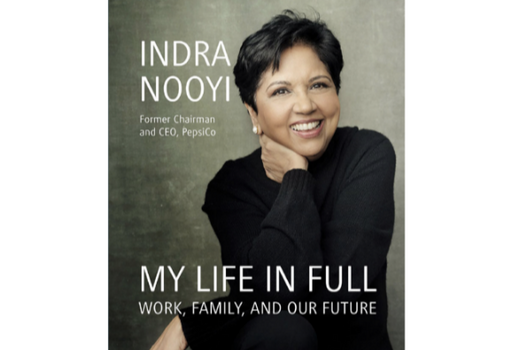
WOMEN-INSPIRED

WOMEN-INSPIRED

Indra Nooyi is among the world's most admired CEOs, and her story of being the first woman of color and immigrant to lead a Fortune 50 company is inspiring and engaging. Born and raised in India, the former PepsiCo leader transformed the legendary American brand. In the process, Nooyi created a framework and philosophy for a successful 21st-century business, emphasizing the inextricable link between the health of a company's customers, employees and the world around them.

NEXT GEN

NEXT GEN

Success can take a toll—physically, mentally and spiritually; striving for it can be more taxing still. In The Practice of Groundedness, Brad Stulberg turns the accepted view of ambition on its head, advocating patience and peace of mind as the real path to prosperity. Interlacing insights and ideas from science, philosophy and his own career as a successful corporate coach, Stulberg makes a convincing case for a new leadership ethos—one grounded in health, humility and happiness.

GENERAL

Ginny Smith's eye-opening delves into the way our brain chemicals influence the full range of the everyday actions and sensations of our lives, from enjoying a morning coffee to falling in love, to grappling with pain. The hormones and neurotransmitters at work in our brains are responsible for every conscious and subconscious thought, memory, feeling, urge and more. Want to know what's really going on in your head? Overloaded has the answer.

I am Brent Foster, CEO of Northbound Wealth and I have recommended good books for friends to read over the years.  The following is a non-exhaustive list of titles since 2001 as a reference:

2019

  • Man’s Search for Meaning by Victor E. Frankl 
  • The Girl with Seven Names: Escape from North Korea by Lee Hyeon-seo with David John
  • Educated: A Memoir by Tara Westover
  • Bad Blood by John Carreyrou
  • Into the Abyss by Carol Shaben
  • The Return by Hisham Matar
  • The Great Bridge by David McCullough
  • All the Light We Cannot See by Anthony Doerr
  • Less by Andrew Sean Greer

2018

  • The Story of Success by Malcom Gladwell
  • The Millionaire Next Door by Thomas Stanley and William Danko

2017

  • Make Your Bed: Little Things That Can Change Your Life…And Maybe the World by William H. McRaven
  • The Art of Invisibility: The World’s Most Famous Hacker Teaches You How to Be Safe in the Age of Big Brother and Big Data by Kevin Mitnick
  • The Four: The Hidden DNA of Amazon, Apple, Facebook, and Google by Scott Galloway
  • Endurance: A Year in Space, A Lifetime of Discovery by Scott Kelly
  • The Magnolia Story by Joanna and Chip Gaines
  • Elon Musk: Tesla, SpaceX, and the Quest for a Fantastic Future by Ashlee Vance
  • The Nudge: Improving Decisions About Health, Wealth, and Happiness by Richard H. Thaler and Cass R. Sunstein
  • The Sun and Her Flowers by Rupi Kaur
  • The Shack: Where Tragedy Confronts Eternity by William P. Young
  • Hillbilly Elegy: A Memoir of a Family and Culture in Crisis by J.D. Vance

2001 - 2016

  • The Total Money Makeover by Dave Ramsey
  • Smart Money, Smart Kids by Dave Ramsey & Rachel Cruze
  • Managing God's Money by Randy Alcorn
  • Life after Loss by Bob Deits
  • Life Application Study Bible, 3rd Edition NIV by Zondervan  
  • The Constitution of the United States of America, "And the selected writings of the Founding Fathers" by Barnes & Noble 2012
  • The Greatest Generation by Tom Brokaw
  • Rich Dad Poor Dad by Robert Kiyosaki
  • Real Money by Jim Cramer
  • Good to Great by Jim Collins
  • C.S. Lewis - all of his works. 
  • Fibonacci Trading by Carolyn Boroden
  • Technical Analysis of the Financial Markets by John Murphy
  • Lone Survivior by Marcus Luttrell
  • Elliott Wave Principle by Frost & Prechter (Key to Market Behavior)